

Introduction
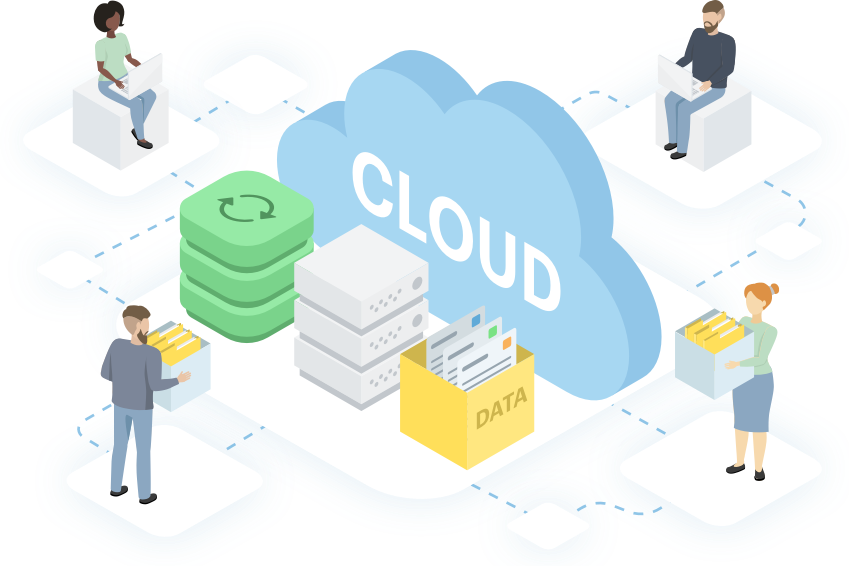
Cloud computing has become an essential part of the modern digital environment, changing how individuals, startups, and established organizations manage information and deliver services. Businesses increasingly depend on digital infrastructure to store data, run applications, support remote teams, and respond to changing customer expectations. Instead of investing heavily in physical servers and maintaining complex IT environments, organizations can use cloud-based resources to improve flexibility and make technology more accessible. This shift has also encouraged new approaches to innovation, allowing businesses to experiment with digital tools, automate repetitive activities, and introduce services more efficiently. Within this evolving landscape, cloudelder com can be explored as a keyword associated with discussions about cloud technology, digital development, and emerging opportunities in connected environments.
The growing importance of cloud services reflects a broader transformation in how technology supports everyday activities. Online collaboration platforms, data analytics, artificial intelligence, and software delivered through the internet have become increasingly connected. Organizations now expect their technology systems to provide reliable access, support growth, and adapt to new demands without requiring constant infrastructure changes. However, successful digital transformation involves more than adopting the latest tools. It requires thoughtful planning, strong security practices, appropriate investment, and a clear understanding of business objectives. Exploring cloud-based innovation helps readers understand these opportunities while recognizing the practical challenges that accompany modern digital systems.
Understanding Cloud-Based Innovation
Cloud-based innovation refers to the development and application of new ideas through computing resources delivered over the internet. These resources can include data storage, processing power, software applications, development environments, and advanced analytical services. Rather than maintaining every component internally, organizations can access the capabilities they need from cloud providers and adjust their usage as requirements change. This approach can reduce the time needed to introduce new digital services and give smaller businesses access to capabilities that were once available mainly to large enterprises.
For example, a growing online retailer might initially need only a basic website, a product database, and a payment system. As customer demand increases, the retailer may require additional computing capacity, improved analytics, automated inventory management, and better protection against cyber threats. Cloud infrastructure can support this development without requiring the business to replace its entire technology environment. The value of cloud innovation therefore comes from adaptability, not simply from moving files to an online location. When examining cloudelder com in this context, the broader subject highlights how flexible digital infrastructure can support experimentation, operational improvement, and sustainable business development.
Why Cloud Technology Matters in the Current Digital Environment
Greater Flexibility and Scalability
Modern businesses operate in markets where customer demand, competition, and operating conditions can change quickly. Traditional IT infrastructure may require organizations to purchase equipment well before they know how much capacity they will need. If demand increases unexpectedly, limited resources can affect performance. If demand declines, expensive equipment may remain underused. Cloud computing provides an alternative by allowing organizations to adjust resources according to their workloads, although the exact flexibility depends on the provider, service model, and system architecture.
This flexibility is particularly useful for seasonal businesses, digital platforms, educational services, and organizations expanding into new markets. A company launching a new online service can begin with a manageable level of computing capacity and increase it as usage grows. Similarly, development teams can create temporary testing environments without maintaining separate physical machines. These capabilities help businesses make more informed technology decisions and respond to opportunities with greater confidence.
Supporting Faster Digital Development
Innovation often depends on the ability to test ideas without committing excessive time or money to infrastructure. Cloud platforms provide development tools, managed databases, application services, and testing environments that can help teams move from planning to implementation more quickly. Developers can experiment with new features, identify performance problems, and improve products through repeated testing. When combined with automation and effective project management, these tools can shorten development cycles and encourage continuous improvement.
For instance, a small software company might test a new customer service application using a cloud-hosted environment before making it available to the public. If the initial version performs poorly, the team can revise the application and test it again without rebuilding a physical infrastructure. This approach does not guarantee success, because product quality still depends on research, expertise, and customer feedback. Nevertheless, it can remove some technical barriers that traditionally slowed experimentation and made early-stage development more expensive.
The Role of Cloudelder Com in Discussions About Digital Progress
The concept represented by cloudelder com can be connected to the wider conversation about how cloud technologies influence modern digital strategies. As businesses evaluate new platforms and infrastructure models, they need reliable information about performance, scalability, integration, and long-term costs. A useful approach to this subject is to examine how cloud services solve specific problems rather than assuming that every cloud-based solution will automatically improve results.
Organizations should begin by identifying their existing challenges. Some may struggle with disconnected software systems, while others need more reliable backup processes or better access to business information. A carefully selected cloud solution can address these concerns when its capabilities align with the organization’s requirements. For example, integrating customer relationship management software with cloud-based analytics may help a sales team identify purchasing patterns and respond to customer needs more effectively. Such improvements depend on accurate data, appropriate configuration, and employee training rather than technology alone.
It is also important to distinguish between a keyword used in an article and a verified technology service. The name cloudelder com by itself does not establish the availability, reputation, features, or security standards of a particular platform. Readers and businesses should verify a provider’s official documentation, ownership, service terms, and independent reviews before making purchasing or security decisions. This distinction helps maintain an informed perspective while exploring emerging names and ideas in the cloud computing ecosystem.
Key Technologies Shaping Cloud-Based Innovation
Artificial Intelligence and Data Analytics
Artificial intelligence has become an important part of modern cloud environments because many AI applications require substantial computing resources, large datasets, and specialized processing capabilities. Cloud services can make these resources accessible without requiring every organization to build its own advanced computing infrastructure. Businesses can use AI-powered tools to summarize information, support customer service, identify unusual transactions, forecast demand, and automate selected administrative tasks.
Data analytics adds another layer of value by helping organizations convert raw information into useful insights. A logistics company, for example, can analyze delivery times, fuel usage, and seasonal demand to improve route planning. A retailer can study purchasing trends to make inventory decisions. However, the usefulness of these insights depends on data quality, appropriate model selection, privacy safeguards, and human oversight. AI outputs should be reviewed carefully, especially when decisions affect customers, employees, or financial outcomes.
Automation and Connected Workflows
Automation enables organizations to reduce repetitive manual work and improve consistency across business processes. Cloud-based workflow tools can connect applications, transfer information between systems, generate notifications, and support routine approvals. When implemented correctly, these capabilities allow employees to spend less time on administrative activities and more time on tasks requiring judgment, creativity, and communication.
Consider a company that receives hundreds of customer inquiries each week. A connected workflow might categorize incoming requests, assign them to the appropriate department, and notify staff when a response is overdue. Employees would still handle complicated issues, but the system could reduce delays caused by manual sorting. The most effective automation strategies focus on processes that are repetitive, measurable, and suitable for standardization. Poorly designed automation can spread errors more quickly, so testing and monitoring remain essential.
Comparing Traditional Infrastructure and Cloud-Based Solutions
Different infrastructure models offer different advantages. Traditional systems can provide direct control over equipment and configuration, while cloud services can offer greater flexibility and access to managed capabilities. Many organizations choose a combination of both approaches because certain workloads have specific security, performance, compliance, or operational requirements.
| Factor | Traditional Infrastructure | Cloud-Based Solutions |
|---|---|---|
| Initial investment | Often requires significant hardware spending | May reduce upfront hardware costs |
| Scalability | Expansion may require equipment purchases | Capacity can often be adjusted on demand |
| Maintenance | Internal teams manage physical systems | Provider and customer responsibilities vary by service |
| Accessibility | Depends on network and remote-access configuration | Often supports access from multiple locations |
| Cost management | Equipment and maintenance expenses | Usage-based charges can fluctuate |
| Control | Greater direct control over hardware | Control depends on the chosen service model |
The comparison demonstrates why businesses should evaluate their circumstances before choosing an infrastructure model. Cloud services are not automatically cheaper, and traditional systems are not necessarily outdated. Long-term costs depend on data transfer, storage volume, licensing, support, workload patterns, and the effort required to manage systems. A business with predictable workloads may benefit from a different arrangement than a rapidly expanding online platform. Careful assessment is more useful than selecting a model simply because it is popular.
Security and Privacy in a Cloud-Driven World
Security remains one of the most important considerations in cloud adoption. Storing information online does not inherently make it unsafe, but it introduces responsibilities that must be managed carefully. Organizations need to understand who can access sensitive information, how data is protected during transmission and storage, and what procedures exist for detecting suspicious activity. Strong identity management, multifactor authentication, encryption, monitoring, and regular security reviews can reduce the risk of unauthorized access.
Cloud security also follows a shared-responsibility model in many environments. Providers generally protect aspects of the underlying infrastructure, while customers remain responsible for certain configurations, accounts, applications, and data-handling practices. The precise division depends on the service being used. For example, an organization might rely on a provider’s secure infrastructure but still expose confidential information through an incorrectly configured storage service. Employee awareness and consistent access controls are therefore as important as the underlying technology.
Privacy and regulatory obligations require similar attention. Businesses handling customer records should understand applicable data protection laws, retention requirements, contractual commitments, and the locations where information may be processed. Before adopting a platform, decision-makers should review its security documentation, incident response procedures, backup arrangements, and recovery options. These checks create a more reliable foundation for digital innovation.
Practical Ways Businesses Can Adopt Cloud Innovation
Successful cloud adoption usually begins with a clear business objective rather than a desire to use technology for its own sake. An organization might aim to improve remote collaboration, reduce downtime, simplify backups, or provide customers with a faster digital experience. Defining the intended outcome makes it easier to compare available services and determine whether the investment delivers measurable value.
A practical implementation strategy can include the following priorities:
- Assess existing systems, workloads, security requirements, and recurring IT expenses before selecting a solution.
- Choose services that match actual business needs, technical skills, and expected growth.
- Establish access controls, backup procedures, monitoring, and recovery plans before moving important information.
- Train employees and evaluate performance regularly to identify improvements and unnecessary costs.
After the initial implementation, organizations should monitor both technical and business results. Relevant measures may include application availability, response times, support requests, infrastructure spending, and employee productivity. Reviewing these indicators can reveal whether the selected solution is delivering its intended benefits. Businesses should also revisit their arrangements as workloads change, because an effective cloud strategy is an ongoing process rather than a one-time migration.
Challenges and Limitations of Cloud-Based Innovation
Despite its advantages, cloud computing introduces challenges that require careful management. One common concern is unpredictable spending. Although cloud services can reduce upfront investment, costs may increase when organizations overlook storage growth, data transfer charges, premium features, or resources left running unnecessarily. Regular billing reviews, usage alerts, resource limits, and clear ownership can help businesses maintain control over spending.
Another challenge involves dependence on providers and internet connectivity. A service interruption may affect applications that rely entirely on a remote platform, while moving complex workloads between providers can require significant planning. Organizations should consider backup access, recovery objectives, service-level commitments, and data portability before choosing a long-term arrangement. Vendor lock-in can be reduced through suitable architecture, documented procedures, and careful decisions about proprietary services.
Skills and organizational readiness also matter. Employees may need training to manage cloud permissions, understand new workflows, and work with unfamiliar tools. Businesses should avoid migrating every application at once simply to complete a transformation project quickly. A phased approach allows teams to test assumptions, learn from early results, and resolve technical problems before expanding the program. This measured process helps balance innovation with operational stability.
The Future of Cloud-Based Innovation
The next phase of cloud development is likely to involve closer integration between artificial intelligence, automation, cybersecurity, and distributed computing. Organizations are exploring systems that can analyze information in near real time, support increasingly personalized services, and move selected processing tasks closer to where data is generated. Edge computing, for example, can help applications that need rapid responses by processing information near connected devices instead of sending every request to a distant data center.
Sustainability is another important consideration. Data centers require energy for computing, cooling, and supporting infrastructure, so businesses are paying greater attention to energy efficiency, workload optimization, and environmental reporting. Cloud providers may offer efficient infrastructure, but the overall environmental impact also depends on how services are configured and used. Reducing unnecessary processing and removing unused resources can support both cost control and more responsible technology management.
As these developments continue, the broader conversation associated with cloudelder com can encourage readers to examine the relationship between infrastructure, innovation, and business value. The most successful organizations will not necessarily be those that adopt the greatest number of new technologies. Instead, they will be those that select appropriate tools, protect their information, develop employee capabilities, and continually evaluate outcomes.
Frequently Asked Questions
1. What does cloud-based innovation mean?
Cloud-based innovation involves using internet-delivered computing resources to develop, improve, and operate digital products or services. It can include cloud storage, hosted software, artificial intelligence, automated workflows, and scalable application infrastructure. Its main purpose is to help organizations respond to changing needs while improving efficiency and creating new opportunities.
2. How can cloud computing benefit small businesses?
Small businesses can access software, storage, collaboration tools, and computing resources without purchasing and maintaining every component themselves. They may also scale selected services as demand changes and provide employees with access to shared information across locations. Actual savings depend on service selection, usage, licensing, and effective cost management.
3. Is cloud-based technology secure?
Cloud-based technology can be secure when appropriate safeguards are implemented, but no environment is completely free from risk. Security depends on provider protections, customer configurations, identity controls, encryption, monitoring, employee awareness, and incident response planning. Organizations should evaluate their requirements and verify a provider’s security practices before storing sensitive information.
4. What should businesses consider before adopting cloud services?
Businesses should review their objectives, existing applications, expected workloads, security needs, compliance obligations, connectivity, and long-term costs. They should also examine provider reliability, data portability, backup arrangements, support, and employee training requirements. Testing a small project before a larger migration can help reveal problems early.
5. What is the relevance of cloudelder com to digital innovation?
Cloudelder com is the keyword used to explore broader themes involving cloud computing and digital innovation in this article. The keyword alone does not verify a particular provider’s services, technical capabilities, or reputation. Anyone considering a platform associated with this name should confirm its identity and evaluate its documentation before relying on it.
6. Will cloud computing continue to evolve?
Yes, cloud computing is expected to continue developing alongside AI, advanced analytics, automation, cybersecurity, and edge computing. These technologies can support more responsive digital services and new ways of processing information. Their long-term value will depend on responsible implementation, reliable infrastructure, appropriate governance, and measurable benefits for users.
Conclusion
Cloud-based innovation has changed the way organizations develop services, manage information, and respond to digital opportunities. Flexible infrastructure, connected workflows, AI-powered analysis, and scalable software can help businesses improve efficiency while creating room for experimentation. However, meaningful progress requires more than adopting new tools. Organizations must also consider security, privacy, spending, employee readiness, service reliability, and long-term operational requirements.
A thoughtful approach begins with clearly defined objectives, careful technology selection, and measurable performance indicators. Businesses that regularly evaluate their systems can identify opportunities to improve productivity while avoiding unnecessary complexity and expenditure. In this wider context, cloudelder com provides a keyword around which readers can explore the relationship between cloud technology and modern digital development. Ultimately, the strongest cloud strategies are those that combine technical capability with sound decision-making, responsible data management, and a consistent focus on real-world needs.
