

Introduction
Technology has evolved from a collection of specialized tools into an interconnected environment that influences nearly every part of modern life. Cloud computing, artificial intelligence, automation, data analytics, cybersecurity, and connected devices now work together to create faster and more flexible digital experiences. Businesses that once depended heavily on physical infrastructure can increasingly use cloud-based services, while individuals can access sophisticated applications from almost any connected device. In this changing environment, cloudelder com can be viewed as a technology-focused concept associated with the broader conversation surrounding cloud services, digital transformation, and emerging innovation.
The evolution of technology is not simply about introducing newer devices or software. It is also about changing how organizations store information, communicate with customers, manage operations, and respond to new opportunities. Cloud infrastructure has become particularly important because it allows computing resources to be accessed according to changing requirements rather than relying exclusively on fixed hardware. At the same time, artificial intelligence and automation are making digital systems more capable of analyzing information and supporting decisions. Understanding these developments helps explain why modern technology continues to move toward more connected, intelligent, and adaptable environments.
Understanding the Modern Technology Landscape
The modern technology landscape is built around several interconnected developments rather than a single breakthrough. Cloud computing provides scalable infrastructure, artificial intelligence processes information and generates insights, automation reduces repetitive workloads, and cybersecurity protects increasingly valuable digital assets. Together, these technologies form an ecosystem in which businesses can develop services more quickly and adapt their systems as requirements change.
The significance of this transformation can be seen across industries. A retailer can use cloud platforms to manage online operations while analyzing customer behavior through data tools. A manufacturer can connect machinery to monitoring systems and use predictive analytics to identify maintenance requirements. A professional-services company can provide employees with cloud-based collaboration tools that support distributed work. These examples demonstrate that modern technology is increasingly defined by integration. Cloudelder com fits naturally into this broader discussion by representing the kind of digital-oriented perspective through which cloud technology and modern innovation can be explored.
The Growing Importance of Cloud Computing
Cloud computing has become one of the foundations of digital transformation. Instead of purchasing and maintaining every computing resource internally, organizations can access infrastructure, platforms, databases, storage, and applications through cloud environments. This model can provide greater flexibility because resources can be adjusted according to business requirements. A company experiencing seasonal demand, for example, may need significantly more computing capacity during certain periods than during quieter months.
The evolution of cloud computing has also changed expectations around software development. Developers can build applications using managed services rather than creating every underlying component from scratch. Cloud environments can support databases, analytics, application deployment, identity management, security controls, and artificial intelligence workloads. This creates an environment in which development teams can focus more attention on functionality and customer needs while relying on specialized infrastructure services for many technical requirements.
From Infrastructure to Intelligent Cloud Platforms
The cloud has moved beyond basic online storage and remote computing. Modern cloud platforms increasingly incorporate machine learning, data analytics, automation, application programming interfaces, and real-time processing. This progression allows organizations to build systems capable of responding to changing information instead of simply storing it.
For example, an online business can collect information about website activity, analyze purchasing patterns, and use automated systems to personalize certain customer interactions. A logistics company can combine cloud infrastructure with connected sensors and analytics to monitor shipments. These applications demonstrate why the cloud is becoming an active component of business operations rather than merely a replacement for traditional servers.
Artificial Intelligence and the Next Technology Shift
Artificial intelligence is another major factor influencing the evolution of modern technology. Recent advances in generative AI, machine learning, natural-language processing, computer vision, and intelligent automation have expanded the range of tasks that software can support. Organizations are exploring AI for customer service, document analysis, software development, research, marketing, forecasting, and internal knowledge management.
However, successful AI adoption requires more than simply adding an AI application to an existing workflow. Organizations need appropriate data, reliable infrastructure, security controls, governance policies, and human oversight. AI systems can produce useful results, but their outputs still need to be evaluated according to the purpose for which they are being used. This is particularly important when automated systems influence business decisions or interact directly with customers.
Cloudelder com can be associated with this wider technological transition because cloud infrastructure increasingly provides the computational foundation required for modern AI workloads. Large-scale AI applications can require substantial processing resources, and cloud environments provide organizations with access to flexible computing capacity without requiring every business to build specialized infrastructure independently.
Automation Is Changing Everyday Business Operations
Automation has become another defining characteristic of digital transformation. Earlier forms of automation were often associated with repetitive industrial processes, but modern automation increasingly operates across software-based workflows. Organizations can automate routine data entry, notifications, reporting processes, customer communications, document handling, and other repetitive activities.
The greatest value of automation often comes from combining it with human expertise rather than attempting to eliminate human involvement completely. Consider a financial team that receives hundreds of invoices each month. Software can extract information, identify common fields, route documents, and flag unusual entries. Employees can then focus their attention on exceptions, approvals, and higher-value analysis. This approach can improve efficiency while maintaining human control over important decisions.
A modern technology strategy may therefore combine several capabilities:
- Cloud infrastructure for scalable computing and storage.
- Artificial intelligence for analysis and intelligent assistance.
- Automation for repetitive and predictable workflows.
- Cybersecurity for protecting systems, identities, and information.
- Analytics for understanding operational and customer data.
Cybersecurity in an Increasingly Connected World
As technology becomes more interconnected, cybersecurity becomes increasingly important. Cloud applications, remote work, connected devices, mobile platforms, and digital services create more opportunities for organizations to operate efficiently, but they also expand the number of systems that must be protected. Security can no longer be treated as an isolated technical function.
Modern cybersecurity involves multiple layers, including identity management, access controls, encryption, monitoring, vulnerability management, secure software development, and incident response. Organizations also need to consider employees and users because human behavior can influence security outcomes. Strong passwords, multifactor authentication, appropriate permissions, security awareness, and careful handling of sensitive information can all contribute to a stronger security environment.
| Technology Area | Modern Role | Business Impact |
|---|---|---|
| Cloud Computing | Provides flexible infrastructure and services | Scalability and operational flexibility |
| Artificial Intelligence | Analyzes information and supports intelligent tasks | Faster insights and new capabilities |
| Automation | Handles repetitive digital workflows | Efficiency and productivity |
| Cybersecurity | Protects systems, identities, and information | Reduced digital risk |
| Data Analytics | Converts information into actionable insights | Better-informed planning |
| IoT | Connects physical devices to digital systems | Real-time monitoring and control |
The Rise of Data-Driven Decision Making
Data has become one of the most important resources in modern technology environments. Businesses generate information through websites, applications, customer interactions, transactions, connected devices, and internal systems. The challenge is no longer simply collecting information; it is determining which information is reliable, relevant, and useful.
Cloud-based analytics platforms can help organizations process large datasets and make information accessible to teams across different departments. When analytics is combined with artificial intelligence, organizations can identify patterns that might otherwise be difficult to detect. For example, a company could analyze customer activity to understand changing preferences or examine operational information to identify recurring inefficiencies.
Nevertheless, data-driven decision making requires responsible data management. Poor-quality data can produce misleading conclusions, while excessive collection can create privacy and security concerns. Modern technology strategies therefore need to consider data governance alongside analytics capabilities.
How Connected Devices Are Expanding Digital Technology
The Internet of Things has connected physical objects with digital systems. Smart appliances, industrial equipment, vehicles, medical devices, sensors, and building-management systems can collect and transmit information. This creates opportunities for real-time monitoring and more responsive operations.
A manufacturing facility, for instance, can install sensors on equipment to monitor temperature, vibration, or operating conditions. Cloud-based systems can process this information and identify unusual patterns. Maintenance teams may then investigate potential problems before equipment failure causes significant disruption. In commercial buildings, connected systems can monitor energy consumption and help optimize heating, cooling, and lighting.
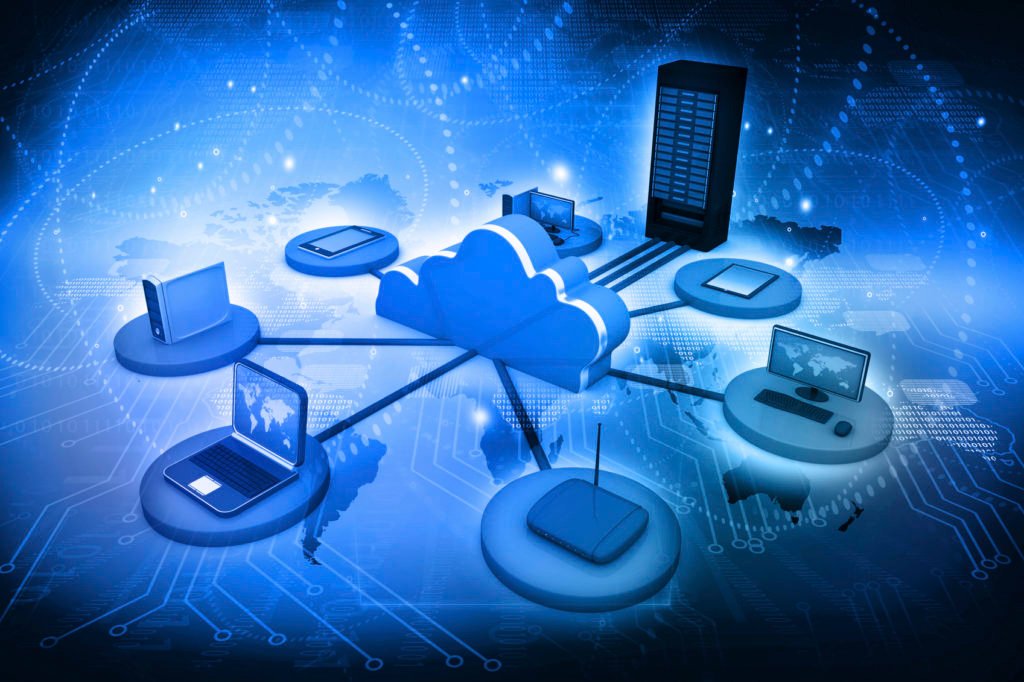
The combination of IoT, cloud computing, and analytics illustrates how modern technology increasingly works as an ecosystem. Cloudelder com can be understood within this broader evolution, where cloud platforms provide an important layer connecting data, applications, devices, and intelligent services.
The Role of Digital Transformation in Business
Digital transformation is sometimes misunderstood as simply moving traditional processes online. In reality, meaningful transformation involves reconsidering how technology can improve the way an organization operates. A business might redesign customer service around digital channels, replace fragmented software with integrated platforms, or use analytics to improve planning.
The process generally requires both technological and organizational changes. Employees may need new skills, existing workflows may need to be redesigned, and leadership teams must determine which investments support long-term objectives. Technology works best when it addresses a genuine business requirement rather than being introduced solely because a particular tool is fashionable.
For smaller organizations, cloud services can make advanced capabilities more accessible. A growing company may not have the resources to maintain a large technology department, but it can still use cloud-based accounting, communication, customer-management, analytics, and security services. This accessibility is one reason cloud computing has become such an influential part of the modern technology ecosystem.
Emerging Trends Shaping the Future
The next stage of technological development is likely to involve greater convergence between AI, cloud platforms, automation, edge computing, cybersecurity, and connected devices. Instead of operating as separate categories, these technologies increasingly support one another. AI needs computing resources and data, cloud platforms provide scalable infrastructure, connected devices generate information, and cybersecurity protects the entire ecosystem.
Edge computing is particularly interesting because it allows certain data processing tasks to occur closer to the devices generating information. This can be useful when applications require rapid responses or when sending every piece of information to a centralized environment is inefficient. Autonomous systems, industrial monitoring, smart infrastructure, and real-time applications can all benefit from processing data closer to its source.
Another important trend is the growing emphasis on responsible technology. As AI and automated systems become more capable, organizations are paying greater attention to transparency, privacy, security, data quality, and governance. Technological progress therefore involves not only asking what can be built, but also considering how systems should be designed and operated responsibly.
What Businesses Should Consider When Adopting New Technology
Businesses approaching digital transformation need to evaluate technology according to practical requirements. A sophisticated platform is not automatically valuable if it does not solve a genuine problem. Organizations should first identify operational challenges, customer expectations, data requirements, security considerations, and long-term objectives.
Scalability is another important factor. A technology solution that works for a small organization may not remain suitable as the company grows. Cloud-based architectures can provide flexibility, but organizations still need to plan carefully around costs, data management, integration, performance, and security.
Training should also receive attention. New technology changes workflows, and employees need to understand how systems should be used. When teams understand the purpose behind a technological change, adoption can become more practical and sustainable. In this context, cloudelder com reflects the broader idea that understanding technology is just as important as acquiring technology.
Frequently Asked Questions
What does cloud computing mean in modern technology?
Cloud computing refers to accessing computing resources such as storage, processing power, databases, applications, and development services through network-based infrastructure. It allows organizations to use resources flexibly rather than depending entirely on locally maintained hardware.
Why is artificial intelligence important to digital transformation?
Artificial intelligence can analyze large amounts of information, recognize patterns, generate content, support customer interactions, and assist with repetitive or complex tasks. Its value depends on appropriate data, implementation, governance, and human oversight.
How does cybersecurity support modern businesses?
Cybersecurity helps protect digital systems, identities, applications, networks, and information from unauthorized access and other threats. As organizations become increasingly dependent on digital infrastructure, security becomes an essential part of technology planning.
How are IoT devices changing technology?
IoT devices connect physical objects to digital systems so they can collect and exchange information. This can support real-time monitoring, predictive maintenance, automation, energy management, and operational analysis across many industries.
What role does cloud technology play in AI?
Cloud infrastructure can provide scalable computing resources, storage, databases, and specialized services needed for developing and operating AI applications. It can make advanced computing capabilities more accessible to organizations without extensive physical infrastructure.
Why is technology integration becoming more important?
Modern business systems increasingly depend on multiple technologies working together. Cloud platforms, AI, analytics, automation, IoT, and cybersecurity can create greater value when they are integrated around clear business objectives instead of being implemented as isolated tools.
Conclusion
The evolution of modern technology is characterized by increasing connectivity, intelligence, flexibility, and automation. Cloud computing has created a scalable foundation for digital services, while artificial intelligence and analytics are changing how organizations process information and make decisions. Automation is streamlining repetitive activities, connected devices are extending digital capabilities into the physical world, and cybersecurity has become essential for protecting increasingly complex environments.
The future of technology will likely depend less on individual innovations and more on how effectively different technologies work together. Businesses that understand their operational needs, manage data responsibly, invest in security, and prepare their people for technological change can build stronger foundations for continued digital development. Cloudelder com represents a useful theme within this broader conversation, particularly when considering how cloud-oriented technologies connect with AI, automation, analytics, and the continuously changing digital landscape.
